About All Tours Pink Beach ToursBoat ToursFrom Labuan Bajo ToursPrivate ToursOne Day Tours Directions Hours & Fees
Find Tours 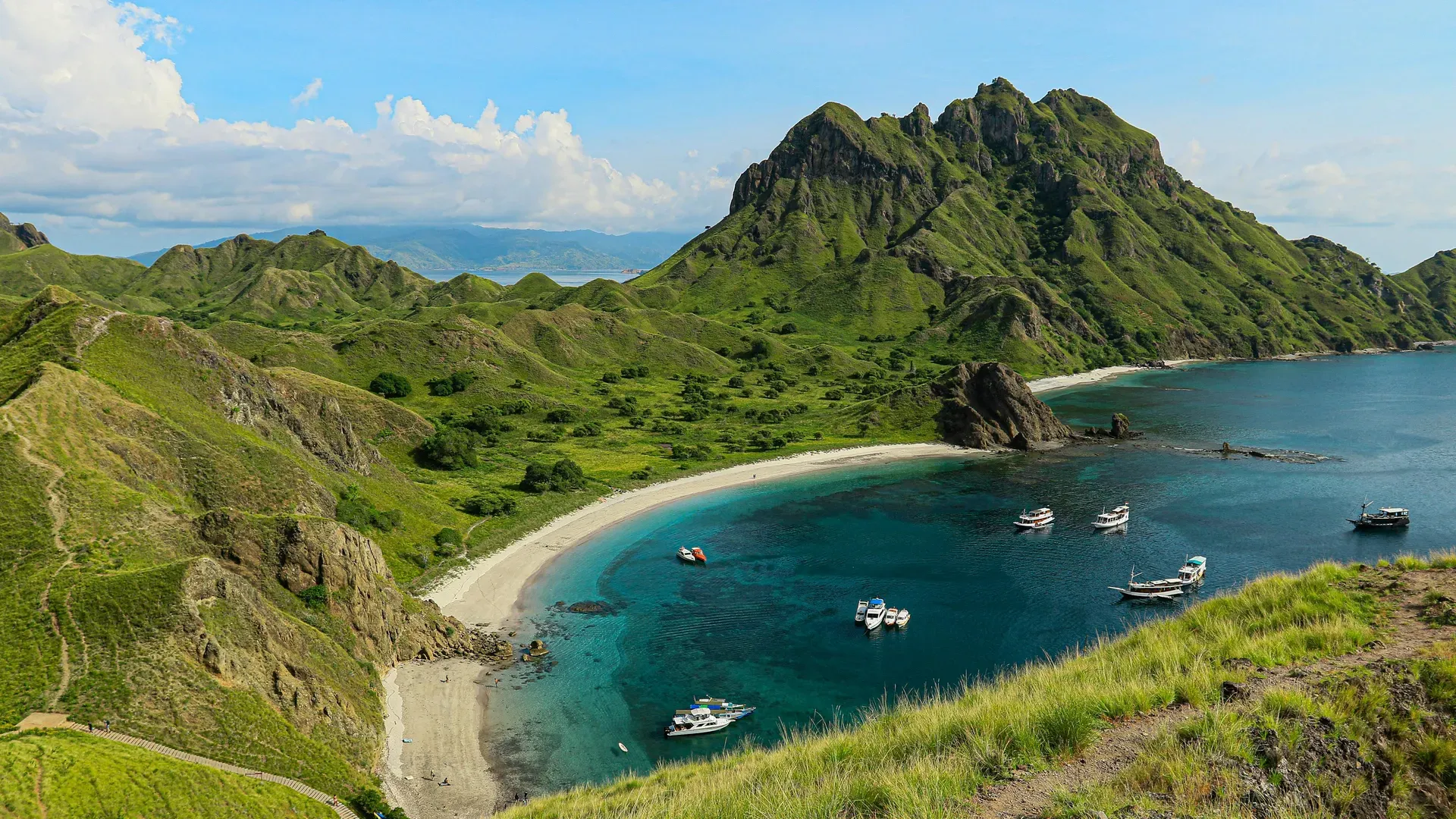
3,270 giant lizards roam 390 square kilometers of volcanic terrain between Sumbawa and Flores in Indonesia. The island anchors a 1,733-square-kilometer national park protecting both terrestrial predators and 260 species of reef-building coral.
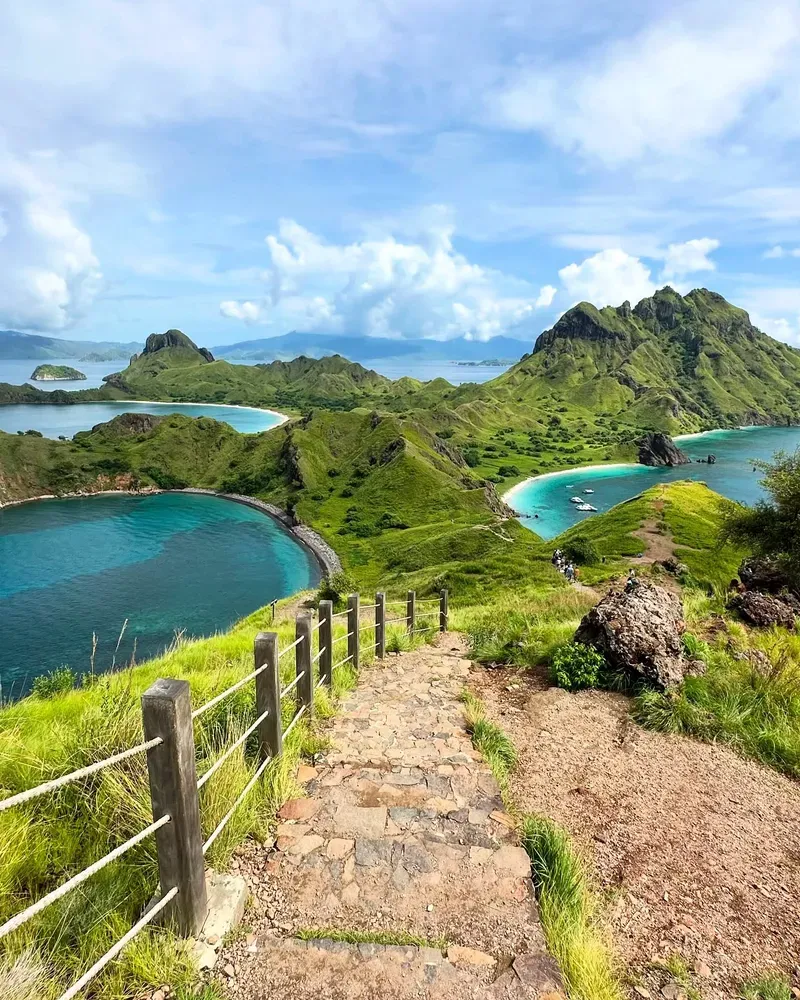
3,270 Komodo dragons dominate 390 square kilometers of semi-arid savannah in East Nusa Tenggara, Indonesia. The island sits between Sumbawa and Flores within the Lesser Sunda chain, characterized by steep volcanic hills, thorny vegetation, and coastal fringes of white and pink sand. Microscopic red Foraminifera organisms mix with white coral fragments to create the famous pink beaches along the deeply indented bays. The island anchors a 1,733-square-kilometer national park protecting both terrestrial predators and 260 species of reef-building coral.
The terrain demands physical exertion. Temperatures routinely exceed 32°C (90°F) with high humidity, and the trekking paths at Loh Liang consist of uneven dirt and loose rocks. Visitors arrive via speedboat or traditional wooden Phinisi from Labuan Bajo, a 40-kilometer journey across currents known for sudden whirlpools. Rough seas during the January to February monsoon season frequently force harbor closures and cancel boat trips. Mating season in June and July presents another challenge, as dragons retreat deep into the forest and become difficult to spot.
Below the surface, the marine environment rivals the terrestrial wildlife. The surrounding waters sit within the Coral Triangle, supporting large aggregations of reef manta rays at Manta Point. High-voltage currents sweep through dive sites like Batu Bolong and Castle Rock, requiring advanced diving certifications to navigate safely. Park entry requires a 250,000 IDR weekend ticket, plus a mandatory 120,000 IDR ranger fee per group. The island operates entirely without ATMs or credit card terminals, forcing travelers to carry at least 1,000,000 IDR in cash to cover taxes, trekking permits, and wildlife observation fees.
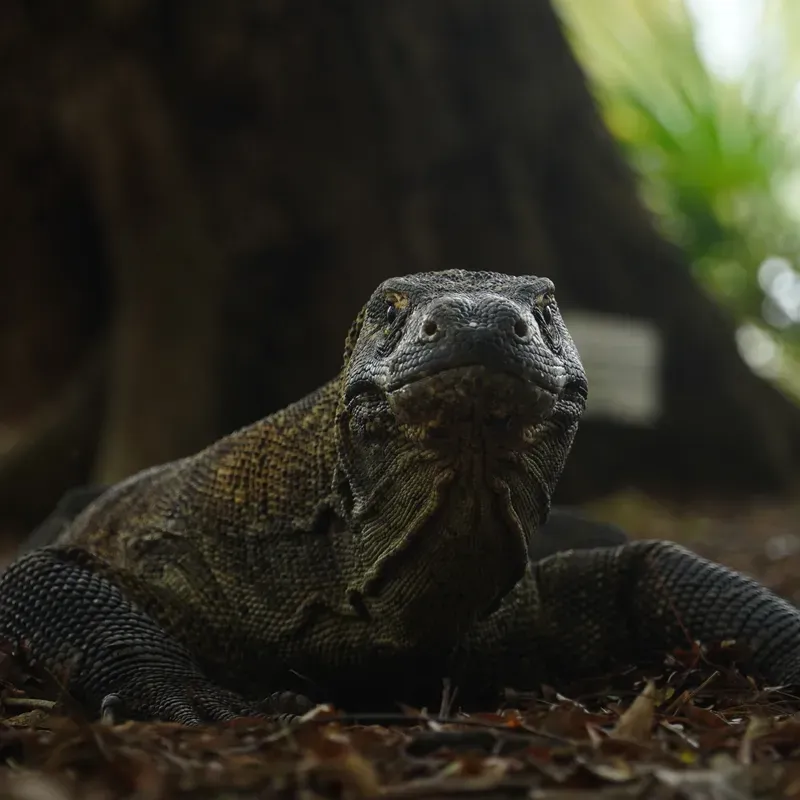
Dutch colonial officer Lieutenant Steyn van Haasbroek led an expedition to the island in 1910 after hearing rumors of 'land crocodiles'. His reports prompted Peter Ouwens, director of the Zoological Museum at Bogor, to publish the first scientific description of Varanus komodoensis in 1912. The discovery triggered international interest, shifting the island from an isolated outpost to a focal point of biological research. Expeditions throughout the 1920s captured live specimens for zoos, establishing the dragon's reputation globally.
Early conservation efforts materialized in 1938 when the Dutch East Indies government designated the area as a nature reserve. The Indonesian government expanded these protections by establishing Komodo National Park in 1980, encompassing Komodo, Rinca, and Padar islands. UNESCO recognized the park's global importance by inscribing it as a World Heritage Site in 1991 and later as a Man and Biosphere Reserve. The New 7 Wonders of Nature campaign further elevated the island's profile, drawing mass tourism to a previously remote region.
Tourism infrastructure developed slowly. For decades, only dedicated naturalists and divers braved the multi-day ferry rides from Bali or Lombok. The expansion of Komodo Airport (LBJ) in Labuan Bajo transformed access, reducing the journey from Jakarta to a two-hour flight costing around 1,500,000 IDR. This shift brought thousands of daily visitors, straining the local ecosystem and infrastructure. Speedboats now depart Labuan Bajo at 06:00 daily, completing the 40-kilometer crossing in 90 minutes.
Managing human-wildlife conflict dictates current park policies. The 1,800 human residents of Komodo Village live alongside the apex predators, relying on elevated houses and strict waste management. The National Park Authority plans to cap daily visitor numbers at 1,000 by 2026 to mitigate environmental degradation. Commercial filming and drone operations face heavy regulation. Pilots must secure a SIMAKSI permit and pay a 1,000,000 IDR daily fee, registering their equipment at least seven days in advance via the siora.id portal.
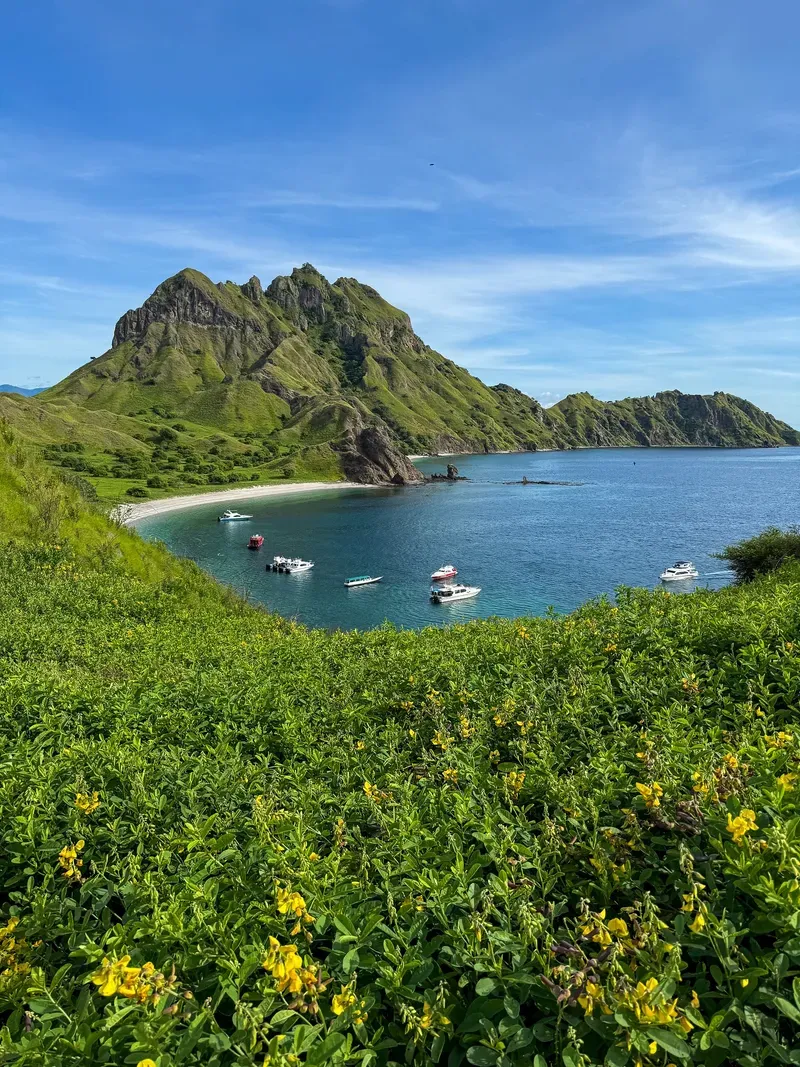
Mount Arab rises 735 meters above sea level, anchoring a rugged spine of volcanic hills that run the length of the island. The topography traps moisture during the short rainy season, briefly turning the savannah green before the equatorial sun bakes the landscape into a semi-arid expanse of brown grass and thorny Lontar palms. Deeply indented bays fracture the coastline, creating sheltered coves and unpredictable tidal rips. The island covers 390 square kilometers, making it the largest landmass within the national park boundaries.
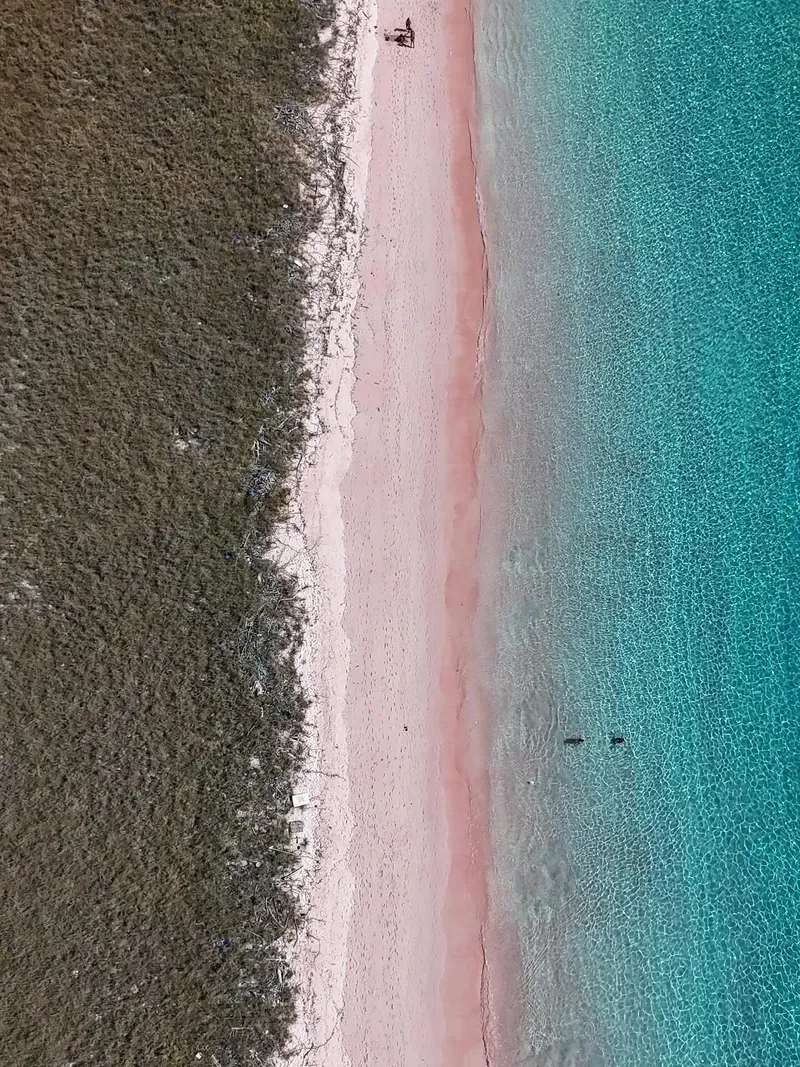
The beaches derive their distinct coloration from the breakdown of marine organisms. At Pink Beach, microscopic red Foraminifera shells wash ashore and blend with pulverized white calcium carbonate from the surrounding reef. The resulting sand feels coarse and packs tightly near the water line. There are no paved paths, ramps, or concrete docks here. Boats anchor offshore, and visitors wade through waist-deep water to reach the shore. The lack of infrastructure renders the island inaccessible for wheelchairs and highly challenging for individuals with limited mobility.
Oceanic conditions around the island present serious hazards. The Indonesian Throughflow forces massive volumes of water through the narrow straits between Sumbawa and Flores, generating downcurrents that can pull divers toward the sea floor. Water temperatures fluctuate sharply based on geography. The sheltered northern bays maintain a warm 29°C (84°F), while the southern coastlines exposed to Indian Ocean swells frequently drop to 22°C (71°F).
Terrestrial exploration requires preparation for extreme heat. The porous volcanic rock retains no surface freshwater, making the island one of the driest regions in Indonesia. Trekking inland without at least 1.5 liters of water poses a severe dehydration risk. The short loops at Loh Liang offer little shade, forcing hikers to rely on SPF 50+ sunscreen and wide-brimmed hats. Wildlife observation demands specific camera gear; a 70-200mm telephoto lens allows photographers to capture detailed images while maintaining the mandatory five-meter safety distance from the venomous reptiles.
Local folklore binds the human residents of Komodo Village to the dragons through the legend of Putri Naga, the Dragon Princess. The myth states she gave birth to twin sons: a human named Gerong and a lizard named Orah. This shared ancestry dictates that the islanders treat the predators not as monsters, but as siblings. Villagers historically left portions of their deer hunts in the forest to feed their reptilian brothers, reinforcing a bond that prevented attacks on the human settlement.
This symbiotic relationship faces modern pressures. Conservation laws now prohibit the hunting of Timor deer, the dragon's primary prey, forcing the lizards to rely entirely on wild populations rather than human offerings. The transition from a fishing-based economy to tourism has altered daily life in the village. Residents now carve wooden dragon statues and sell pearls to visitors arriving on liveaboard boats. The influx of foreign currency provides economic stability but disrupts traditional agricultural and maritime practices.
Strict behavioral rules govern human presence on the island to prevent fatal encounters. Women who are menstruating must inform park rangers before trekking, as the dragons' forked tongues detect blood particles from up to five kilometers away. Rangers carry long, forked wooden sticks to gently push away curious dragons, relying on physical boundaries rather than weapons to maintain safety. Visitors must wear muted colors; bright red clothing can agitate the animals and provoke an aggressive response. Young children require constant physical supervision, as the trails lack safety barriers and the predators roam freely through the brush. The park enforces these regulations strictly, prioritizing the preservation of the dragons' natural hunting behaviors over tourist convenience.
Dragons possess complex venom glands that cause a massive drop in blood pressure and prevent blood clotting.
Adult dragons can reach speeds up to 20 km/h (12 mph) in short bursts.
Thousands of Kalong (flying foxes) emerge from the mangroves near the island every evening at sunset.
The famous pink beaches get their color from microscopic red organisms called Foraminifera mixing with white coral.
The island operates entirely on cash, requiring visitors to carry large amounts of Indonesian Rupiah for park fees.
Park authorities advise against wearing bright red clothing as it can attract the attention of the predators.
Flying a drone requires a SIMAKSI permit and a 1,000,000 IDR daily fee to prevent wildlife disturbance.
Yes. They possess complex venom glands in their lower jaw that secrete toxins. This venom prevents blood clotting and causes a rapid drop in blood pressure, sending prey into shock.
No hotels exist on the island itself. Visitors sleep on liveaboard boats anchored offshore or book accommodations in the gateway town of Labuan Bajo.
Most travelers fly into Komodo Airport (LBJ) in Labuan Bajo from Jakarta or Bali. From the harbor, you must take a speedboat (1.5 hours) or a traditional wooden Phinisi boat to reach the island.
April to June offers green landscapes and calm seas, while September to November provides optimal underwater visibility for diving. January and February bring heavy monsoon rains and frequent boat cancellations.
Yes. A licensed park ranger must accompany you at all times. The rangers carry forked wooden sticks to maintain a safe distance between visitors and the free-roaming predators.
Drone flights require advance registration through the siora.id portal. You must obtain a SIMAKSI permit and pay a daily drone fee of 1,000,000 IDR.
The terrain consists of loose sand, dirt, and rocky paths without paved surfaces. Getting onto the island requires transferring from a boat directly onto a beach or unequipped pier, making it inaccessible for wheelchairs.
Yes, but you must notify your ranger before beginning any trek. Komodo dragons have an acute sense of smell and can detect blood from up to 5 kilometers away, requiring the ranger to provide extra security.
Foreigners pay 150,000 IDR on weekdays and 250,000 IDR on weekends. Additional mandatory costs include a ranger fee of 120,000 IDR per group, plus small taxes for trekking and wildlife observation.
Wear lightweight, breathable clothing and sturdy closed-toe shoes to navigate the rocky paths. Avoid bright red colors, which can attract the dragons, and bring a wide-brimmed hat to block the intense equatorial sun.
Browse verified tours with free cancellation and instant confirmation.
Find Tours